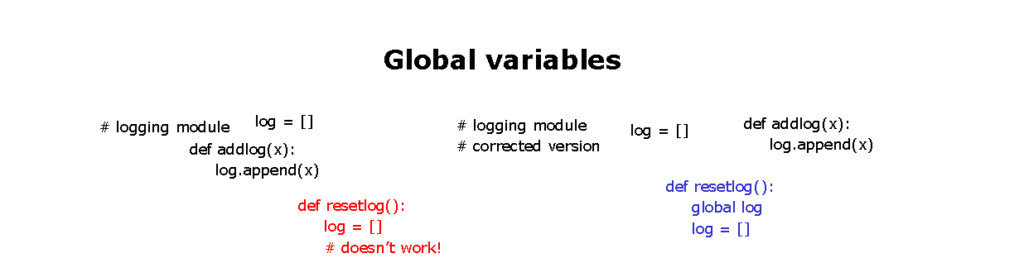
In Python, global variables are variables that are defined outside of any function and can be accessed and used throughout the entire program, including inside functions. They have a global scope, meaning they are recognized in all parts of the code after they are defined. If a function needs to modify a global variable, the global keyword must be used inside that function to indicate that the variable being referenced is global, not local. Global variables are useful for storing values that need to be shared across multiple functions or modules. However, excessive use of global variables can make code harder to debug and maintain, so they should be used carefully and sparingly.
Do it
Here’s a short explanation of the program: This program uses a global variable named counter to keep track of a number. Three functions interact with it:
display_counter()shows the current value ofcounter.increment_counter()increasescounterby 1. It uses theglobalkeyword so it can change the global variable.reset_counter()setscounterback to 0, also using theglobalkeyword.
The main part of the program calls these functions to demonstrate how the global counter is updated and shared across them.
Global variables in Python are important because they allow data to be shared and accessed across multiple functions within a program. They are defined outside of any function and retain their value throughout the program’s execution. This makes them useful for storing values that need to be consistent or remembered across different parts of the code, such as configuration settings, counters, or status flags. Global variables can simplify communication between functions without the need to pass parameters repeatedly. However, they must be used carefully, as overusing them can make code harder to read, debug, and maintain. Proper use of global variables can help keep a program organized and efficient when shared data is necessary.